Why Modern Dental Offices Are Ditching Paper Payments for AI-Ready Systems
By Sam Rockwood ・ November 20th, 2025
Economics students for years to come will study the speedy evolution of the mobile phone, starting circa 1999. You will recall the original peanut-looking Nokia phones. Tiny screen, only used for calling, texting and playing snake game. Then we moved to flip phones which had a larger screen. More texting, slightly more sophisticated games, more snake game, and starting to get web access. Then came a full keyboard for easier texting and messaging. Email access on the mobile phone became commonplace. Blackberries and the like exploded. Then, in 2007, the ‘look’ of the mobile phone stopped evolving.
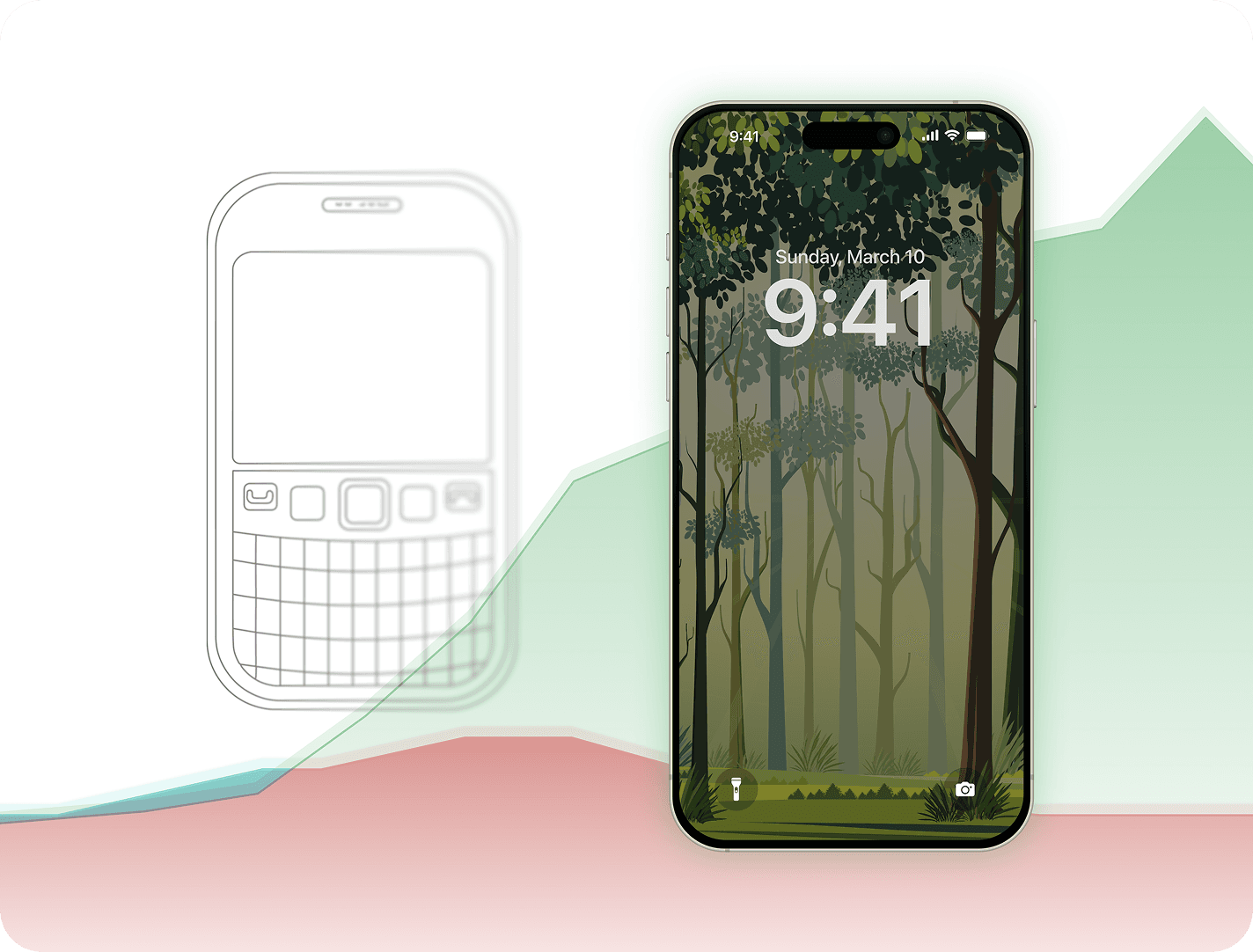
In January 2007 Steve Jobs began a MacWorld presentation explaining that the hardware of the mobile phones of the day was limiting the software. Requiring the use of physical buttons, however many you put on the phone, would still hinder software innovation. What if a developer wanted to create an application that required a type of button that wasn’t on the keyboard? Impossible.
So Apple announced the iPhone with the first touchscreen.
By eliminating the keyboard, the possibilities for software innovation exploded.
Can you imagine using Google Maps or photo editing apps on a phone with a keyboard? So many of your favorite mobile games you play today could never have existed without the invention of the touchscreen.
The rest is history. Obviously, there has been innovation since 2007, but the look and feel of the mobile phone has not changed. Mobile phone manufacturers had to choose to chase Apple and innovate with their own version of a touchscreen or stick with the buttons. As Jobs predicted, the software continued to evolve and companies like Blackberry and those that chose to stick with the buttons died out.
How does this relate to dental insurance payments in 2025?
The most talked about innovation in our day is clearly artificial intelligence. But AI today is limited to only being useful for digital systems. If you are receiving paper payments and EOBs, you are holding on to that Blackberry with the keyboard buttons. And just as mobile phones with a keyboard could not run apps meant for a touchscreen, you will miss out on future innovations made possible by moving your claim payments to digital.
AI will clearly change so much about our world, in particular how we work. I am not an AI expert. However, after nearly 20 years working in healthcare analysis and systems, I am a healthcare data expert. At their core, Large Language Models (LLMs) that run our AI tools are functions. They take data in, apply a set of probabilities and algorithms, and spit results out.
Everyone who works with functions, albeit analysis, LLMs, forecasts, etc., knows that the quality of the output is highly dependent on the data that goes in.
You can’t input minimal or faulty data and expect to get accurate results. In data analysis, this is commonly referred to as GIGO (garbage in, garbage out).
What would happen if you ask your ChatGPT prompt, “Where socks?” Open AI may have access to all the data in the world about sock manufacturers and retailers, the history of socks, the cultural uses of socks. But with the minimal data you’ve given it, the algorithm can’t know if you are asking where you can buy socks, where socks were invented, where socks are typically worn OR are you asking ChatGPT where your own socks are because you can’t find them?!
Similarly, AI cannot ‘work’ on your payment systems if everything is paper-based. We live in a digital world, and have been for several decades now. There was a time in dentistry’s past when claims were sent in to the insurance company via paper in the mail. What a pain to print out the forms, fill them in correctly by hand, stick it in an envelope, find the mailing address, address and stamp it and take it to the post office! Payment for that claim would not be seen for 60 days or more.
Today, however, an architecture has been developed between the practice software, clearinghouse and payer to allow for the immediate transmission of claims data. The EDI files are sent with the push of a button. For those of you that remember the old days, could you be convinced to go back to sending in claims via paper in the mail? Similarly, the payment and data transfer going the reverse direction (from payer to you) will soon be fully digital and you won’t dream of doing it differently.
What type of AI or tech automations could work on my payment systems?
A great question. No one fully knows what the future will hold. When Steve Jobs introduced the touchscreen did he know that hundreds of millions of people would play Angry Birds? I’m guessing not. I can provide a few automations that are here now and coming in the near future. But it is clear that any future automations or integrations with AI will require digital, not paper-based, data.
1. Claim Payment Posting
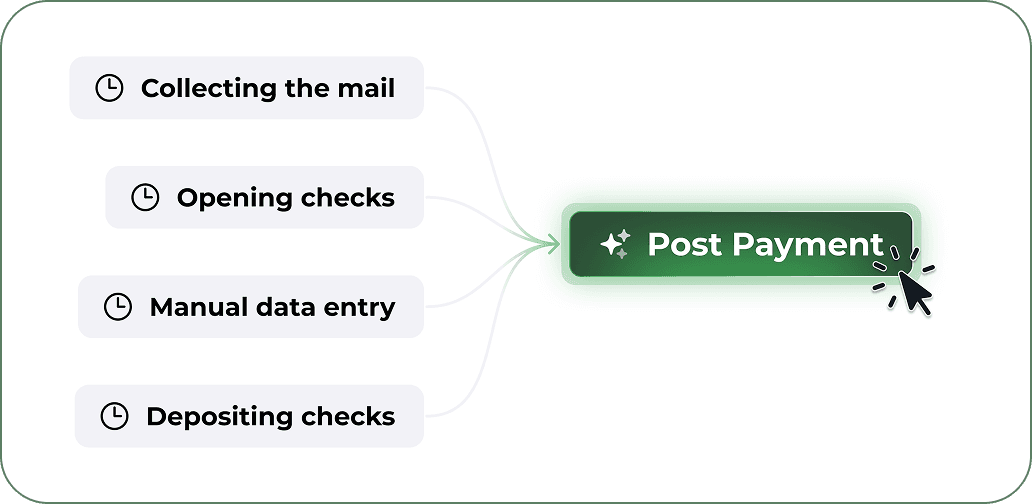
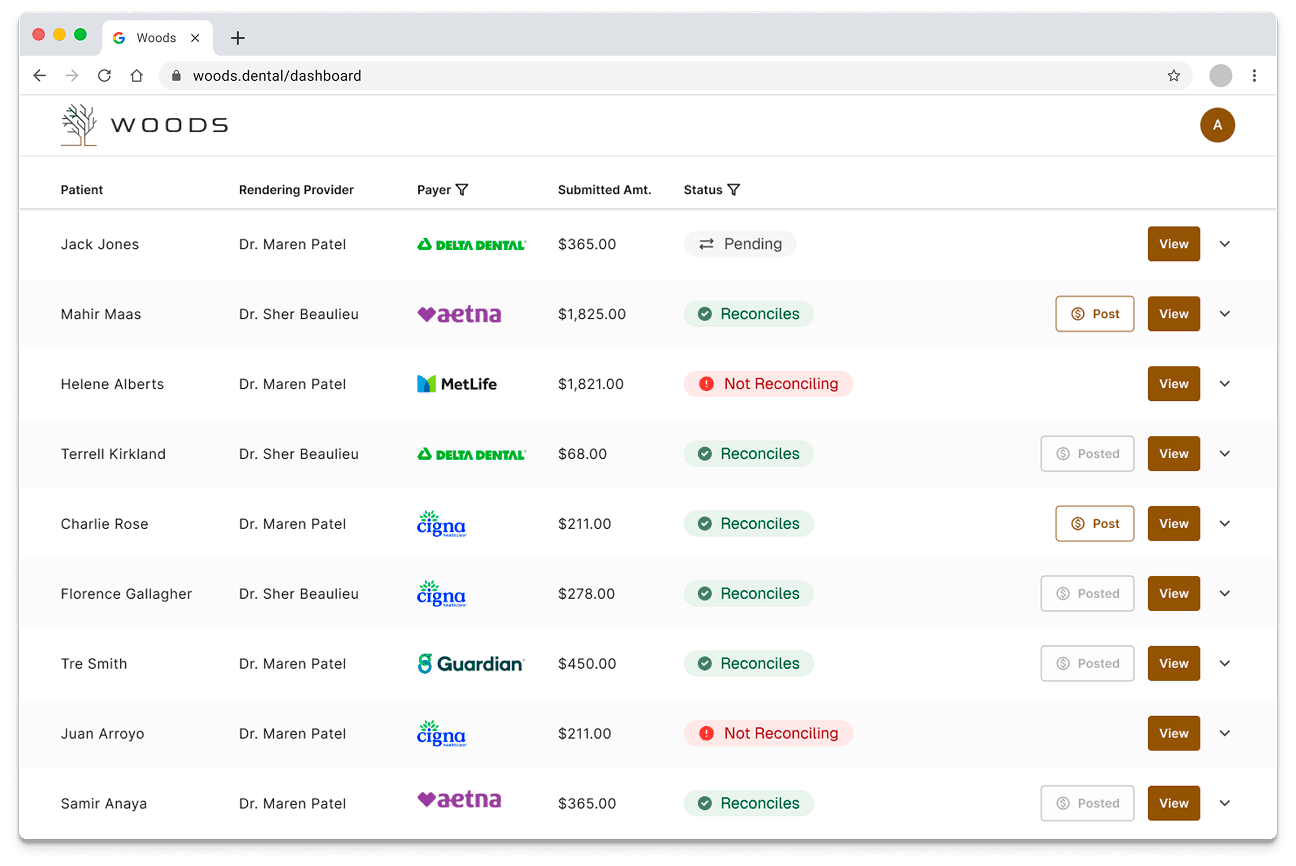
While you spend hours every week collecting the mail, opening the checks, manually entering the paid amounts in your PMS and depositing the checks, there are a growing number of practices that do all this with the push of a button. This month Woods is rolling out Claim Payment Posting which provides all the info you need to reconcile your payments AND if all looks good, the payment amounts are written to your practice software with the push of a button.
2. Claim Status Check
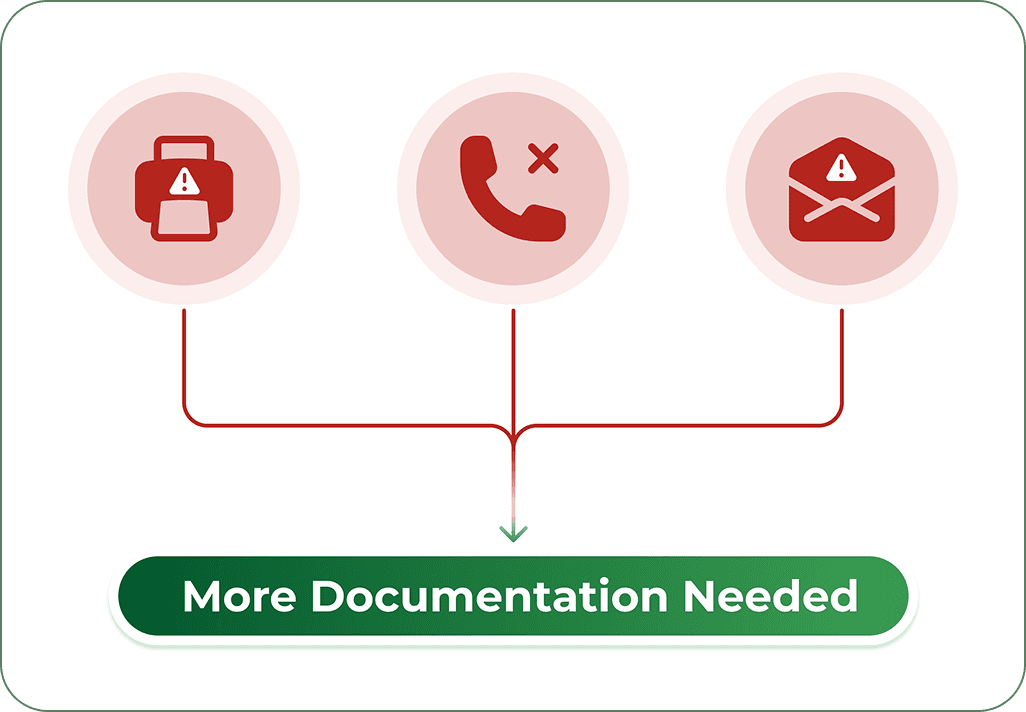
If you are awaiting a claim payment, is it because the mailman is taking too long or because the payer needs more info? If your payments and communications are digital, systems can be put in place to help eliminate the wait on claim payments.
3. Instapay
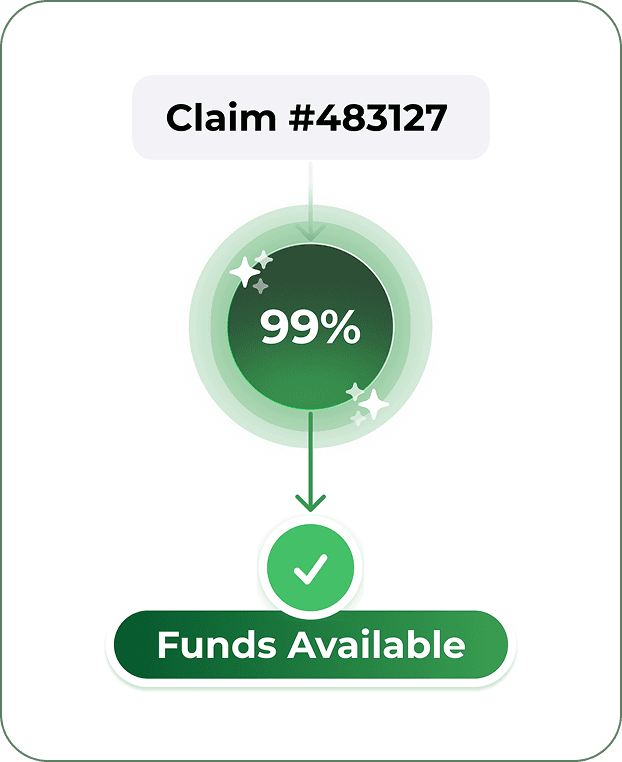
AI tools will soon allow us to determine the probability that a submitted claim will be fully paid. Many claims that are sent in are repetitive or mundane and as such should be expected to be paid nearly 100% of the time. Much like an employee getting access to their paycheck days in advance, payment companies can make claim funds available instantly for providers under these circumstances.
This is just scratching the surface and as AI and other tooling becomes more advanced, the possibilities are endless for how rote office work can be automated and providers can focus more of their time and attention on patient care.
If converting all your claim payments and EOBs to digital sounds overwhelming, let Woods handle the transition for you. Our secure platform and elite onboarding team get all the info needed in a 30 minute onboarding session.
Schedule a Demo